
Data silos are a persistent challenge for organizations, limiting collaboration, creating inefficiencies, and leading to inconsistencies in data-driven decision-making. Master Data Management (MDM) offers a structured solution to these challenges by centralizing and harmonizing data across departments. The Data Privacy Hub (DPH) takes this a step further by providing an integrated approach to data deletion, access, and compliance, ensuring organizations maintain control over their most critical data assets.
The Problem: Fragmented Data Across Departments
Many organizations operate with disparate data systems across different functions—customer service, finance, marketing, and operations all maintain their own databases, often with duplicate or conflicting records. This fragmentation can lead to:
- Limited visibility into business performance due to inconsistent data across teams.
- Inefficiencies caused by redundant processes where teams work with conflicting datasets.
- Compliance risks due to poor data governance and inconsistent record-keeping.
How MDM and DPH Address Data Silos
MDM centralizes and governs critical business data, ensuring that all departments operate from a single source of truth. DPH builds on this foundation by adding a layer of data privacy, security, and compliance that aligns with regulations such as GDPR and CCPA.
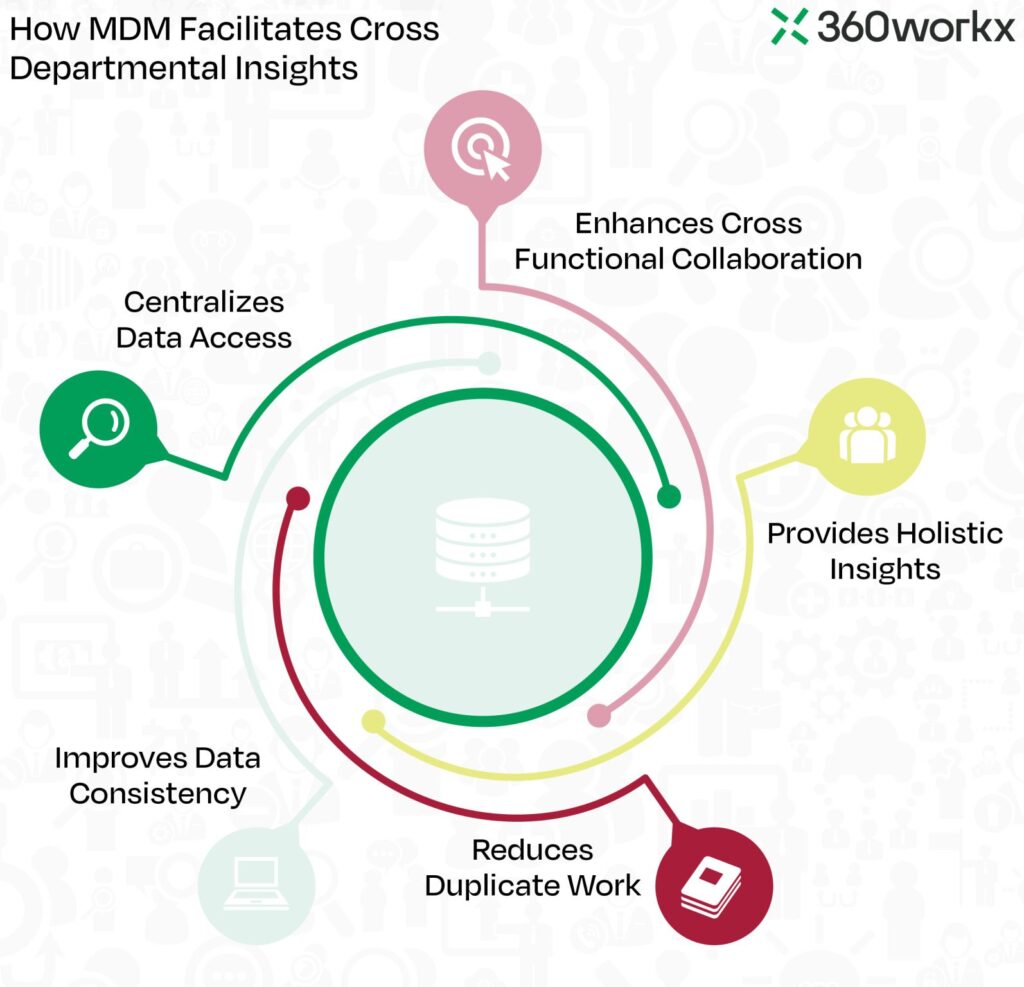
1. Centralized Data Access
MDM consolidates customer, financial, and operational data into a unified system. This ensures that all stakeholders—whether in finance, HR, or marketing—work with consistent and accurate data. With DPH integration, businesses can manage data access requests efficiently, ensuring compliance with privacy laws while enabling secure cross-functional data sharing.
2. Enhanced Cross-Functional Collaboration
When departments work with harmonized data, collaboration improves. Teams can make faster, more informed decisions without wasting time reconciling discrepancies. DPH ensures that access permissions are correctly enforced, so sensitive data is only available to authorized personnel.
3. Holistic Insights for Better Decision-Making
Unified data enables organizations to gain a 360-degree view of their operations. From customer behavior analytics to financial forecasting, businesses can make data-driven decisions based on a complete and accurate dataset. DPH further enhances insights by tracking data deletion workflows, audit trails, and compliance logs, providing transparency into data usage.
4. Eliminating Redundant Work
Data silos often result in duplicate efforts, where teams maintain parallel databases with redundant or conflicting records. MDM eliminates this inefficiency by synchronizing and standardizing records across all systems. DPH complements this by ensuring that obsolete or duplicate records are securely deleted in compliance with legal and operational requirements.
5. Improved Data Consistency and Compliance
Maintaining data integrity is critical for both internal operations and regulatory compliance. MDM enforces data validation rules, ensuring that every department follows the same data structure. With DPH’s automated data deletion workflows, organizations can manage data retention policies, ensure timely removal of outdated records, and maintain compliance with global regulations.
The Future: A Fully Integrated Data Governance Ecosystem
Organizations that successfully implement MDM and DPH solutions eliminate data silos, streamline operations, and foster a culture of transparency and compliance. By integrating data management with privacy controls, businesses future-proof their operations against evolving regulatory challenges while unlocking the full potential of their data assets.